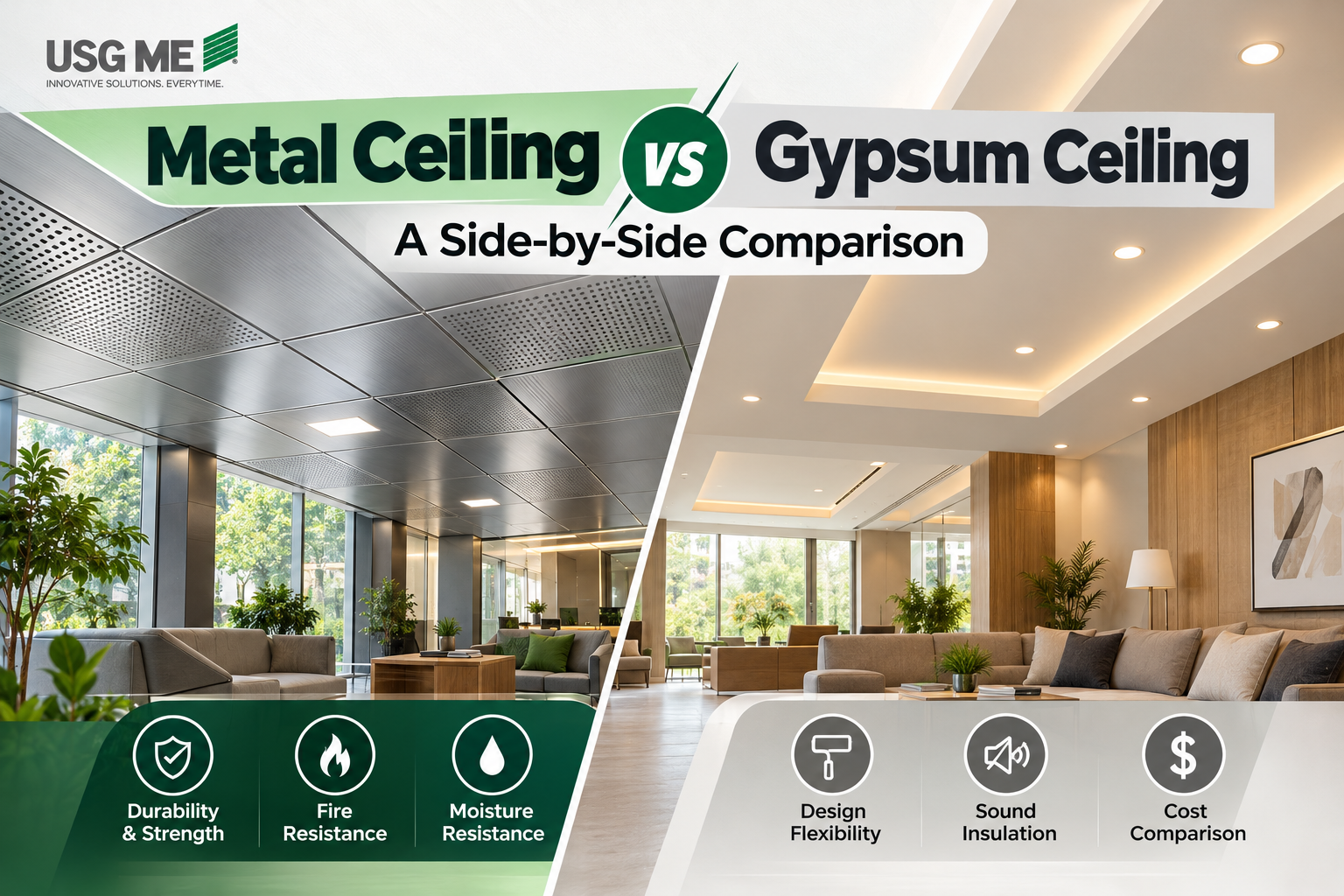
Choosing between a metal ceiling and a Gypsum Ceiling is not simply a question of appearance. The right system depends on how the space will be used, how often services above the ceiling need to be accessed, the required acoustic performance, maintenance expectations, fire requirements, and the architectural finish.
For commercial projects in the UAE, both systems are widely used. Metal False Ceilings are often selected for durability, modular access, and design flexibility, while gypsum-based ceilings are frequently chosen for seamless surfaces, acoustic design, and integrated architectural finishes.
This side-by-side guide compares both options so architects, consultants, and contractors can make a more informed ceiling selection.
Metal Ceiling vs Gypsum Ceiling: What Is the Main Difference?
The main difference lies in the material, construction method, and finished appearance.
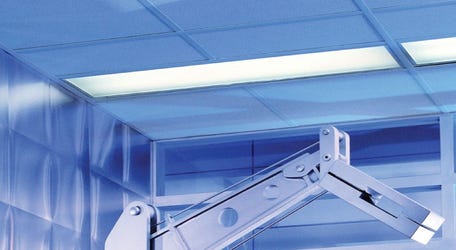
A metal ceiling typically uses aluminium or steel panels installed on a suspended grid or concealed suspension system. These panels may be Lay-In, Clip-In, Hook-On, baffle, strip, expanded mesh, or another specialised configuration.
A gypsum board ceiling uses gypsum-based boards or ceiling tiles installed on a framing or suspension system. Depending on the product, it can create a smooth monolithic finish, a perforated acoustic surface, or a modular tiled ceiling.
USG ME offers both systems. Its Celebretto® range includes metal ceiling solutions in aluminium, galvanized steel, and stainless steel, while its gypsum ceiling range includes modular SoundBlock® tiles and drywall ceiling systems with monolithic and perforated acoustic options.
Metal Ceiling Comparison: Where Do Metal Systems Perform Best?
Metal ceilings are typically chosen where durability, service access, washability, and modular flexibility are important.
USG ME's Lay-In Metal Ceiling, for example, is designed for easy service access, uses a washable polyester powder finish, and can be supplied with perforation patterns and acoustic options. Its Clip-In range provides a concealed ceiling appearance with durable and washable finishes.
Metal ceilings are commonly used in:
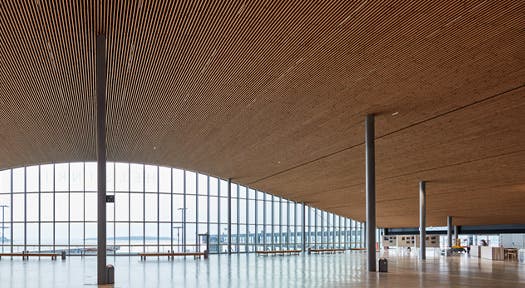
- Airports and transportation facilities
- Healthcare environments
- Offices and commercial buildings
- Shopping malls
- Banks
- Kitchens and utility areas
- Educational facilities
- High-rise developments
One of the biggest advantages is system flexibility. A project can use exposed-grid Lay-In panels, concealed Clip-In panels, linear baffles, Hook-On panels, or custom specialty systems depending on the design intent.
Gypsum Ceiling Comparison: Where Do Gypsum Systems Perform Best?
Gypsum ceilings are generally well suited to interiors where the design calls for a smooth, continuous, or highly integrated ceiling surface.
USG ME's drywall ceiling range includes monolithic acoustic ceilings and perforated gypsum board systems. These can provide a seamless appearance while also addressing acoustic requirements in spaces such as offices, hotels, meeting rooms, cultural venues, and educational environments.
Typical applications include:
- Offices and meeting rooms
- Hotel interiors
- Residential spaces
- Lobbies and atriums
- Museums
- Conference rooms
- Retail environments
- Educational spaces
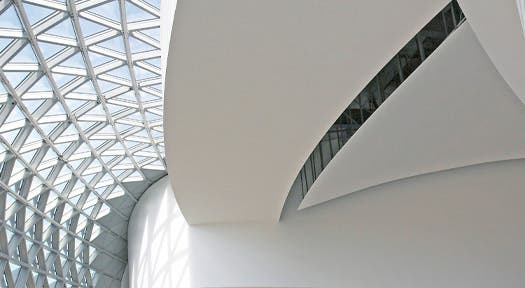
One of the main Gypsum Ceiling Benefits is architectural continuity. Gypsum boards can create smooth, monolithic surfaces that integrate easily with bulkheads, curves, recessed lighting, and other interior features.
False Ceiling Comparison: Metal vs Gypsum at a Glance
Comparison Factor | Metal Ceiling | Gypsum Ceiling |
Appearance | Modular, linear, perforated, or concealed | Smooth, monolithic, tiled, or perforated |
Service access | Generally easier with demountable systems | Depends on system; access panels may be required |
Durability | High resistance to everyday impact and handling | Good, but surface can be more vulnerable to impact |
Cleaning | Usually easy to wipe and maintain | Depends on finish and product |
Acoustic options | Perforated panels with acoustic backing | Perforated boards, acoustic tiles, or monolithic acoustic systems |
Installation | Suspended or concealed metal grid systems | Framed, suspended, tiled, or monolithic |
Design flexibility | Strong for modular and specialty systems | Strong for seamless and shaped designs |
Maintenance access | Strong with Lay-In, Clip-In, and demountable systems | More limited in monolithic systems |
Typical priority | Durability and accessibility | Seamless finish and architectural integration |
This false ceiling comparison shows why one material cannot be considered universally better.
Which Ceiling Offers Better Service Access?
Metal ceilings generally offer more flexibility when frequent access above the ceiling is required.
Lay-In metal panels can typically be lifted from the suspension grid, making it easier to reach HVAC, lighting, electrical, or fire-protection services. USG ME specifically identifies easy service maintenance as one of the advantages of its Lay-In Metal Ceiling.
Clip-In systems also provide access, but panel removal is more controlled.
Gypsum ceilings can still accommodate service access, but monolithic systems usually require dedicated access panels at planned locations.
If frequent above-ceiling maintenance is expected, service accessibility should be considered early in the design.
Which Ceiling Provides Better Acoustic Performance?
Both metal and gypsum ceilings can provide strong acoustic performance when specified correctly.
A perforated metal ceiling allows sound to pass through the panel toward acoustic backing installed behind it. The overall result depends on the perforation pattern, open area, backing material, and ceiling void.
Gypsum systems can also provide high acoustic performance. USG ME's Monosilent Monolithic Acoustical Ceiling achieves up to NRC 0.95 and CAC 43, while the MAC system provides sound absorption of up to NRC 0.9.
USG ME's SoundBlock® gypsum ceiling tiles are also available in multiple perforation patterns and acoustic-performance levels.
Therefore, neither material should automatically be considered acoustically superior. The complete tested assembly matters more than the base material alone.
What Role Do Acoustic Panels Play in Ceiling Design?
Acoustic panels are used to reduce reverberation and improve sound comfort within a room.
In metal ceilings, this function may be achieved through perforated metal panels combined with acoustic backing.
In gypsum systems, acoustic performance can come from perforated boards, modular acoustic tiles, or monolithic acoustic ceilings.
The right approach depends on the space. Conference rooms and offices may prioritise speech clarity, while airports, atriums, and large public interiors may require broader reverberation control.
Which Ceiling Is More Durable?
Metal ceilings generally have an advantage where resistance to frequent handling, cleaning, and service access is important.
USG ME describes its Lay-In and Clip-In systems as robust, washable, and easy to clean.
Gypsum ceilings are also durable when installed correctly, but the finished surface may be more sensitive to impact, water exposure, or repeated opening and closing unless the system is specifically designed for those conditions.
USG ME's gypsum ceiling range includes products designed to resist mold, sagging, and fire, while selected painted gypsum tiles are also scuff- and scratch-resistant.
For heavily serviced commercial areas, metal may offer a practical advantage. For protected interiors, gypsum can provide long-lasting performance with the right system.
Metal Ceiling Installation vs Gypsum Ceiling Installation
The installation method differs significantly between the two systems.
Metal ceiling installation usually involves setting out a suspension system, installing the grid or concealed support structure, and then fitting individual panels.
A suspended metal ceiling can use exposed Lay-In grids, concealed Clip-In suspension, Hook-On rails, or other system-specific components.
Gypsum ceiling installation may involve fixing boards to metal framing, treating joints with tape and gypsum joint compound, sanding, priming, and applying the final finish. Modular gypsum tiles can instead be installed within ceiling suspension grids.
The installation programme should therefore reflect the selected ceiling type, finish level, MEP coordination, and access requirements.
What Is the Role of Gypsum Joint Compound?
A gypsum joint compound is used in drywall ceiling systems to treat board joints, cover fastener heads, and create a smooth surface before painting or decoration.
This is particularly important in monolithic gypsum ceilings, where the visual goal is to create a continuous finish with minimal visible joints.
Metal ceilings do not normally require this type of surface finishing because individual panels arrive with their finished surface already applied.
This difference can affect site sequencing and labour requirements.
Is Gypsum Sheathing Used for Ceiling Finishes?
Gypsum sheathing is typically used as a substrate in exterior wall assemblies rather than as the visible finish for standard interior ceilings.
For interior gypsum ceiling applications, ceiling boards, acoustic boards, or modular gypsum tiles are generally more appropriate.
It is important not to confuse gypsum sheathing with the gypsum boards used for finished interior ceiling systems. Product selection should always follow the intended application and approved assembly.
Which Ceiling Is Easier to Maintain?
Metal ceilings are generally easier to maintain where panels need to be cleaned, removed, and reinstalled regularly.
Lay-In systems are particularly convenient because individual panels can be lifted for maintenance access. Clip-In systems can also be removed using the correct method.
Gypsum monolithic ceilings require less visible panel maintenance but may be more difficult to access if services are located above them. Planned access panels are therefore important.
Maintenance requirements should be considered before ceiling selection rather than after the building is occupied.
Which Ceiling Offers Better Fire Performance?
Both metal and gypsum systems can form part of fire-performing ceiling assemblies.
Metal is non-combustible, while gypsum is also widely used in fire-resistant construction because of its inherent material properties.
However, fire performance should never be judged by material alone. The complete ceiling system, including boards or panels, framing, suspension, joints, penetrations, and tested assembly configuration, determines the actual performance.
USG ME states that its drywall ceiling systems comply with ASTM C423 and ASTM E84 for acoustic and surface-burning requirements, while its specialty metal ceilings also reference Class A surface-burning characteristics under ASTM E84.
Always verify the specific tested system required by the project.
How Do You Choose Between Metal and Gypsum Ceilings?
Start with the operational needs of the space.
Choose a metal ceiling when the project prioritises:
- Frequent access above the ceiling
- High durability
- Washability
- Modular replacement
- Specialty visual effects
- Perforated acoustic panels
- Long-term maintenance flexibility
Consider a gypsum ceiling when the project prioritises:
- Seamless architectural appearance
- Integrated lighting and bulkheads
- Curved or shaped ceiling forms
- Monolithic acoustic finishes
- Smooth painted surfaces
- Minimal visible grid lines
The right choice may also involve combining both systems within the same building.
Which Ceiling Is Better for UAE Commercial Projects?
There is no single answer.
Metal ceilings can be highly effective in airports, hospitals, malls, offices, kitchens, utility areas, and other spaces where durability and access are important.
Gypsum ceilings can be better suited to hotels, offices, lobbies, meeting rooms, retail interiors, and architectural spaces where a seamless finish is a priority.
For UAE projects, the decision should consider humidity, cleaning requirements, service access, acoustic performance, fire criteria, design intent, and long-term maintenance.
The strongest specification is the one that matches the ceiling system to the actual operational needs of the space.
FAQs About Metal Ceiling vs Gypsum Ceiling
Is Metal Ceiling Better Than Gypsum Ceiling?
Not in every application. Metal is often better for accessibility, washability, and modular maintenance, while gypsum is often better for seamless architectural finishes and integrated ceiling design.
Which Ceiling Is Better for Acoustics?
Both can provide strong acoustic performance. Perforated metal ceilings use acoustic backing, while gypsum systems can use perforated boards, acoustic tiles, or monolithic acoustic finishes. Compare the tested NRC and CAC performance of the complete system.
Which Ceiling Is Easier to Maintain?
Metal ceilings are usually easier where individual panels need to be removed regularly. Gypsum monolithic ceilings require planned access panels for services above the ceiling.
Is a Gypsum Ceiling Suitable for Commercial Buildings?
Yes. Gypsum ceilings are widely used in offices, hotels, retail spaces, meeting rooms, museums, atriums, and educational environments.
Are Metal Ceilings Suitable for Wet or High-Maintenance Areas?
Metal ceilings can be suitable for demanding environments when the panel material, coating, and complete system are specified for the conditions. USG ME lists healthcare, kitchens, laundry, and utility spaces among applications for its Lay-In metal ceiling.
Can Metal and Gypsum Ceilings Be Used in the Same Project?
Yes. Many buildings use metal ceilings in service-heavy or high-traffic areas and gypsum ceilings in spaces where a seamless architectural finish is more important.