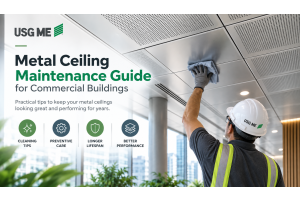
Metal ceilings are widely used in offices, airports, healthcare facilities, retail environments and other commercial buildings because they combine durability with design flexibility and service access. Like any architectural finish, however, they perform best when cleaning, inspection and maintenance are planned rather than left until visible damage appears.
A practical maintenance programme should cover more than surface cleaning. Facility teams also need to inspect panel finishes, suspension components, perimeter details, access points and areas exposed to moisture or heavy dust. The following guide explains how to care for metal ceiling panels safely while protecting appearance, accessibility and long-term system performance.
Why Metal Ceiling Maintenance Matters in Commercial Buildings?
Routine maintenance helps preserve appearance, identify damage early and keep ceiling access practical for building services. USG ME notes that metal ceiling tiles are generally durable and easy to maintain, with dust and dirt removable by vacuuming or wiping with a damp cloth. It also recommends periodic inspection for corrosion or damage, particularly where ceilings face harsh environmental conditions.
In commercial buildings, maintenance is especially important because ceiling voids often contain lighting, HVAC, fire-protection and electrical services. A maintenance programme should therefore consider both the visible panels and the suspension or access system supporting them.
How Often Should Metal Ceilings Be Inspected and Cleaned?
There is no universal cleaning frequency for every building. The right schedule depends on occupancy, dust levels, humidity, ventilation, hygiene requirements and the ceiling finish.
A practical starting point is:
Maintenance activity | Suggested frequency | What to check |
Visual inspection | Monthly or quarterly | Dirt, stains, dents, loose panels and finish damage |
Routine dust removal | As required | Surface dust and debris |
Damp cleaning | Periodically, based on use | Marks, fingerprints and accumulated dirt |
Ceiling-void access check | During service maintenance | Panel removal, grid condition and access routes |
Detailed condition review | Annually | Corrosion, coating damage, suspension and perimeter details |
These intervals should be adjusted according to manufacturer instructions, facility requirements and environmental conditions rather than treated as fixed rules.
Use a Ceiling Inspection Checklist Before Cleaning
A short inspection can reveal whether cleaning alone is enough or whether panels need repair, further investigation or replacement.
Use this ceiling inspection checklist before maintenance begins:
- Check panel surfaces for dirt, stains, scratches, dents or coating damage; inspect perforations for accumulated dust; confirm panel alignment; review grids, clips and visible suspension components; examine perimeter trims and transitions; look for moisture, condensation, leakage or corrosion; inspect frequently removed panels and MEP penetrations; and identify any panel that no longer sits correctly after service access.
Recording these observations helps facility teams identify recurring problems instead of treating each cleaning visit as an isolated task.
What Is the Best Way to Clean Metal Ceiling Panels?
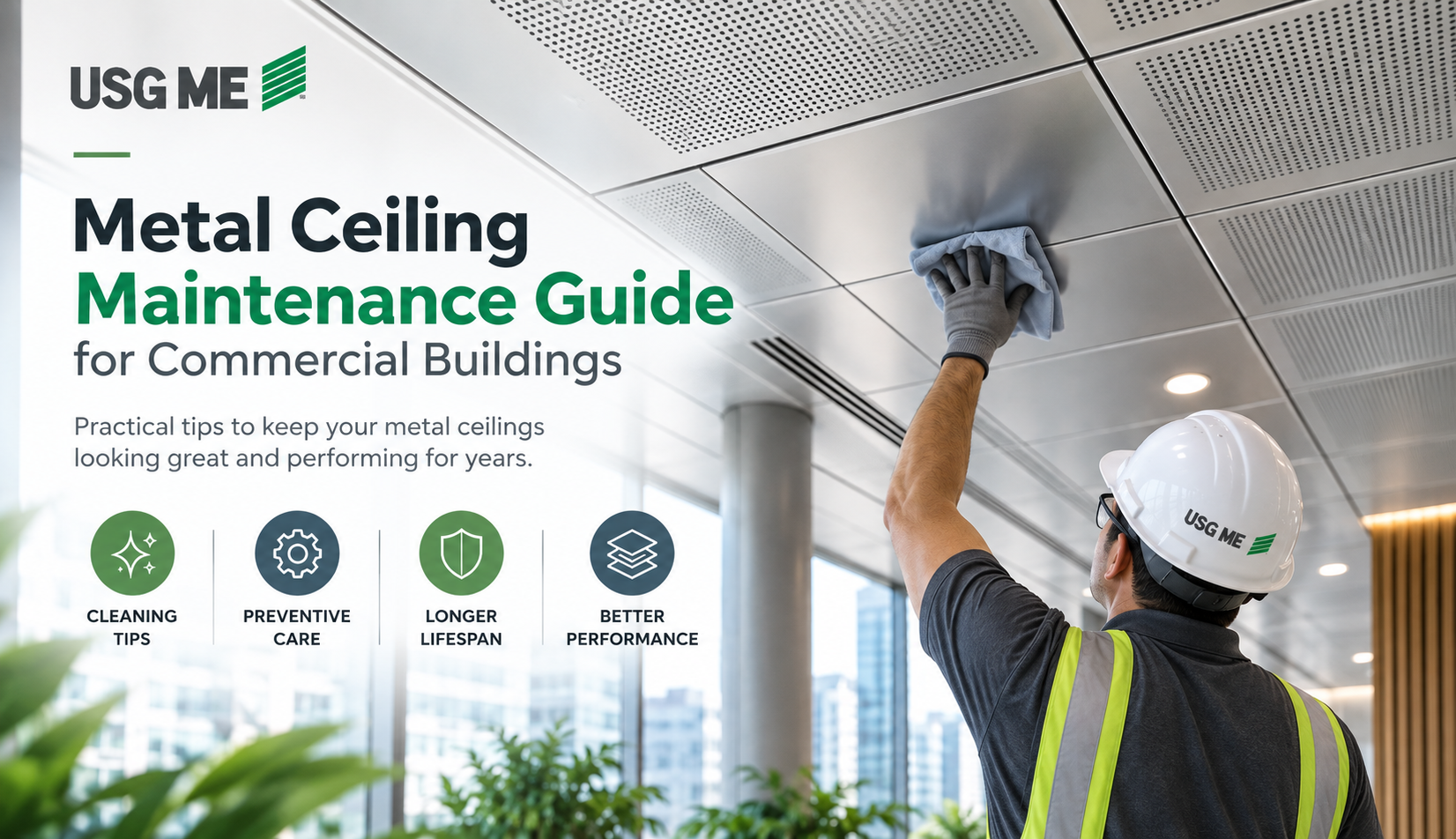
The best way to clean metal ceiling panels is to begin with the least aggressive cleaning method and increase the level of cleaning only where necessary.
USG ME states that metal ceiling tiles can be vacuumed to remove dust or wiped with a damp cloth for routine cleaning.
For cleaning ceiling panels safely, first review the product or finish manufacturer's maintenance instructions and protect furniture and equipment below the work area. Remove loose dust using a suitable vacuum attachment or soft cleaning tool, then wipe the panel gently with a clean, damp, non-abrasive cloth.
If a cleaning product is required, confirm that it is compatible with the coating before use. Avoid soaking joints, acoustic backing or concealed suspension components, and check panel alignment again if panels have been removed during cleaning.
Aggressive scraping, abrasive pads and unapproved chemicals can damage or dull finished surfaces and should not be used unless specifically permitted by the manufacturer.
How Should Perforated Metal Ceiling Panels Be Cleaned?
A perforated metal ceiling needs slightly different care because dust can accumulate around the openings and acoustic fleece, mineral fibre or other sound-absorbing material may be installed behind the panel.
Begin with controlled dry dust removal using a soft attachment or suitable vacuum method. If damp cleaning is necessary, use only enough moisture to clean the visible surface and avoid pushing excessive liquid through the perforations.
Where acoustic backing becomes wet, damaged or detached, the condition should be assessed rather than treated as a normal cleaning issue. The acoustic performance of a perforated ceiling depends on the complete panel, perforation and backing configuration.
USG ME's Celebretto® Clip-In range, for example, includes different acoustic infill options alongside plain and perforated panel configurations.
Clean Suspended Ceiling Panels Without Damaging the System
To clean suspended ceiling panels correctly, maintenance teams first need to understand how each panel is retained.
Lay-In panels generally rest within the suspension grid and can be lifted for access. Clip-In panels are securely engaged with their suspension system and require the appropriate removal method. Hook-On, torsion-spring, baffle and expanded-mesh systems use different support and access arrangements.
Do not force a panel out simply to make cleaning easier. Incorrect removal can deform edges, damage the finish, disturb the suspension or make the panel difficult to reinstall.
When a panel is removed for cleaning or MEP maintenance, handle finished surfaces carefully, retain its correct orientation where necessary and make sure it is properly seated after reinstallation.
Metal Ceiling Panel Care for Different Ceiling Systems
Different types of metal ceiling systems should not automatically receive identical maintenance treatment.
Ceiling system | Maintenance focus |
Lay-In ceilings | Keep panels and exposed grid clean and ensure tiles are correctly reseated after access |
Clip-In ceilings | Use the specified extraction method and inspect panel edges and engagement points |
Hook-On ceilings | Check hooks, rails and demountable access arrangements |
Torsion-spring ceilings | Confirm springs and panel access mechanisms remain correctly engaged |
Baffle ceilings | Clean upper surfaces, edges and suspension points that are less visible from below |
Expanded mesh ceilings | Inspect both visible mesh and plenum-facing surfaces for accumulated airborne dust |
Understanding the ceiling system before maintenance reduces the risk of damaging panels or suspension components.
Watch for Moisture, Corrosion and Finish Damage
Commercial ceiling maintenance should address the cause of staining or deterioration, not simply its appearance.
Water leaks, condensation, persistent humidity or unsuitable cleaning chemicals may affect metal finishes or adjacent components. USG ME recommends inspecting metal ceiling tiles periodically for corrosion or damage, particularly in harsh environmental conditions.
This deserves particular attention in UAE facilities where different areas may experience dust, humidity, coastal exposure or strong transitions between outdoor conditions and air-conditioned interiors.
If corrosion, coating blistering, peeling or recurring discoloration appears, identify the source before repeatedly cleaning the affected area. Surface cleaning alone will not solve an active moisture or environmental problem.
When Should Metal Ceiling Panels Be Repaired or Replaced?
Cleaning cannot correct every ceiling defect.
A panel may require replacement when it is severely dented, deformed, corroded, scratched through its protective finish or unable to sit correctly within the suspension system. Replacement may also be appropriate where repeated MEP access has damaged panel edges or where acoustic backing behind a perforated panel has deteriorated.
For consistent appearance, replacement panels should match the existing dimensions, edge profile, perforation pattern, colour and finish as closely as possible.
Compatibility with the existing suspension system should also be confirmed before replacement material is ordered.
Practical Metallic Ceiling Maintenance Tips to Avoid Damage
Some of the most useful Metallic Ceiling Maintenance Tips involve knowing what not to do.
Avoid abrasive brushes on coated panels, aggressive solvents without product approval, excessive water around perforated panels, forcing securely retained panels from their suspension and reinstalling visibly bent or misaligned components.
Recurring water stains should never be treated as a purely cosmetic issue. Likewise, corrosion should be investigated rather than repeatedly wiped away.
No one should walk on, hang unsupported loads from or otherwise use a suspended metal ceiling as a structural platform unless the specifically designed system permits it.
A controlled, system-aware maintenance approach protects the finish more effectively than aggressive cleaning.
Keep Ceiling Maintenance Records in Commercial Buildings
For larger facilities, maintenance records can make cleaning commercial ceilings more consistent.
Record the ceiling location, system type, inspection date, cleaning method, defects identified and any panels replaced. Photographs can also help facility managers track recurring staining, corrosion or damage associated with service access.
This becomes particularly useful across airports, hospitals, hotels, shopping malls and multi-floor commercial buildings, where different ceiling areas may have very different exposure and cleaning requirements.
Ceiling Maintenance Tips for Long-Term Performance
Good ceiling panel care is based on three principles: inspect regularly, clean gently and investigate unusual deterioration before it becomes widespread.
Metal ceiling systems are designed to offer durability and relatively straightforward maintenance. USG ME also describes its metal systems as washable and easy to maintain, with selected Celebretto® finishes designed for extensive washability.
Maintenance teams should nevertheless follow the documentation for the actual installed product, because panel material, finish, perforation, backing and suspension type can change the appropriate cleaning method.
FAQs About Metal Ceiling Maintenance
1. Can Metal Ceiling Panels Be Washed?
Many metal ceiling finishes are washable, but the cleaning method depends on the product and coating. USG ME recommends routine cleaning of metal ceiling tiles using a damp cloth or vacuum to remove dust and dirt.
2. Can Detergent Be Used on Metal Ceiling Panels?
Only use a detergent or cleaner when it is compatible with the panel finish. Begin with the mildest effective cleaning method and avoid abrasive or aggressive chemical products unless specifically approved.
2. How Do You Clean Perforated Metal Ceiling Panels?
Remove loose dust carefully before using a lightly dampened cloth where required. Avoid saturating perforations because acoustic fleece or other sound-absorbing backing may be installed behind the visible panel.
3. How Do You Clean Suspended Ceiling Panels Safely?
Identify how the panels connect to the suspension system before removing them. Support panels during handling, use appropriate access equipment and reinstall each panel according to the system requirements.
4. How Often Should Commercial Metal Ceilings Be Inspected?
Inspection frequency depends on occupancy, environment and hygiene requirements. Areas exposed to high dust, humidity, frequent maintenance access or demanding cleanliness standards may need more frequent inspection.
5. What Causes Stains on Metal Ceilings?
Dust, condensation, water leakage, airborne contaminants and unsuitable cleaning materials are possible causes. Persistent stains should be investigated before repeated surface cleaning.
6. Do Metal Ceilings Require a Lot of Maintenance?
Metal ceilings generally require relatively low routine maintenance, but regular cleaning and periodic inspections help identify coating damage, corrosion, moisture problems and panel misalignment before they become larger issues. USG ME similarly describes metal ceiling tiles as durable and easy to clean and maintain.